01
Galleries you walk through
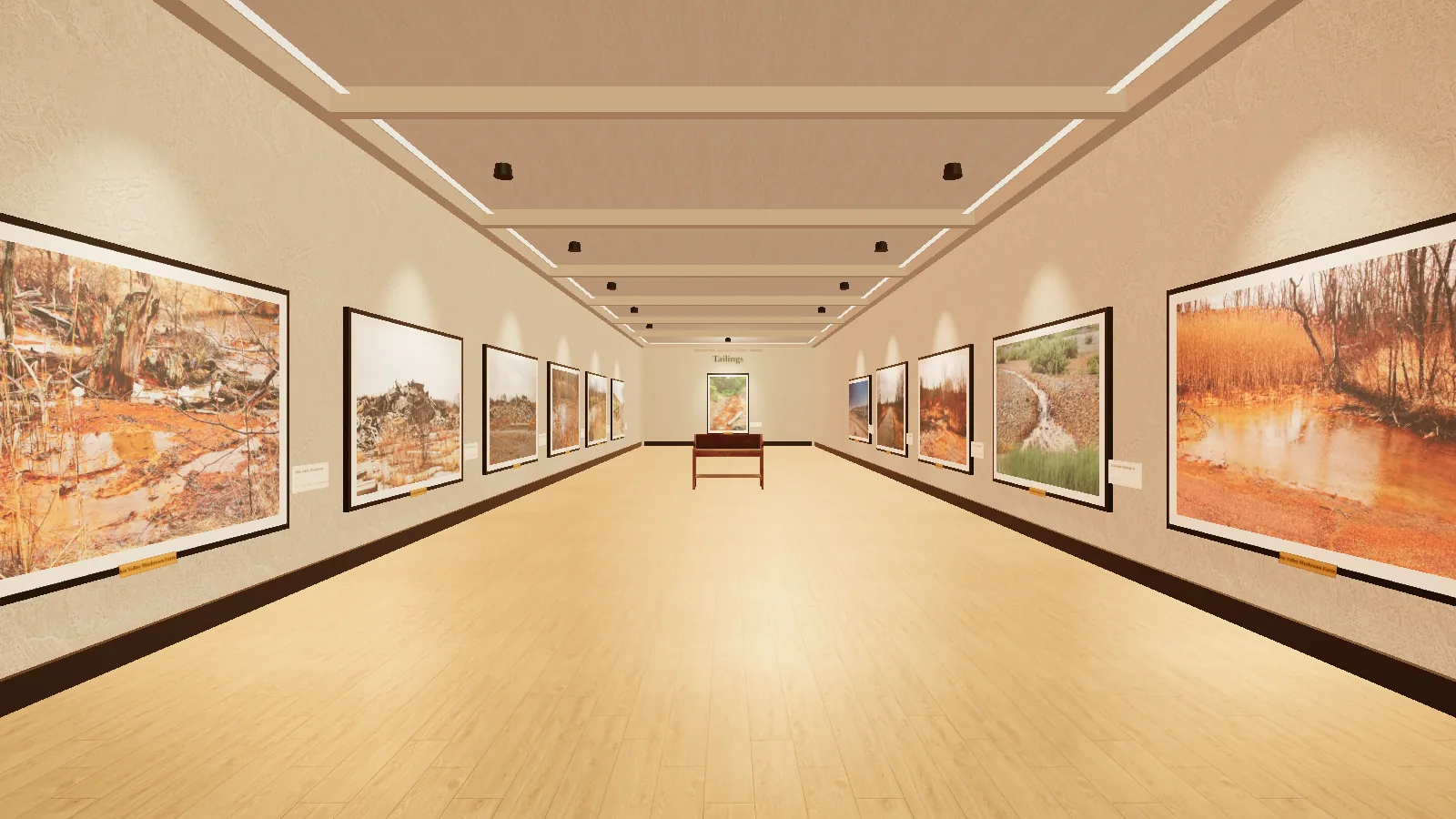
Each chapter is built as a real room. Wall heights, framing, lighting and shadow are all to scale, and clicking a picture glides you up to it.
WebMobTech · proof of concept
Artium builds a real-time 3D exhibition out of a photographic collection, then gives it a search box that reads the pictures rather than the captions.
No sign-up and no login anywhere. The curator side is open too, so you can see how the archive is actually managed.
Not a slideshow
Walk it with the keyboard, look around with the mouse, and click any frame to be carried up to it. This is a live capture, not a mockup.
Walk this room →…
chapters, each its own hall
…
photographs hung and credited
years on one timeline
…
calls to a third-party AI
Try it here
These queries are running against the live archive right now, with no account and no setup. None of them match a caption. The engine is reading the photographs.
Keyword search can only find what a cataloguer already thought to write down. That is the ceiling Artium is built to get past.
Capabilities
01
Each chapter is built as a real room. Wall heights, framing, lighting and shadow are all to scale, and clicking a picture glides you up to it.
02
The engine embeds the photographs themselves. Ask for an orange tailings river and you get one, even when no caption on that frame contains any of those words.
03
Picture and language candidates are gathered separately, merged, then reordered by a second pass that scores each one against what you actually asked for.
04
Zoom out and four decades read as blocks. Zoom in and the same canvas resolves to individual photographs. One view does both jobs, so nobody has to switch modes.
05
There is a full content-management side to the exhibition. Drop photographs in and they are resized, understood, indexed and searchable right away. No redeploy, no reindex script.
06
Every model weight sits inside the image. Nothing calls a third-party AI service, no pixels leave the box, and there is no per-query bill to watch.
How it works
Ingest
Licensed sources only, filtered by allowlist
Derive
Renditions, blur-up placeholder, aspect, EXIF
Embed
Vision and language, both in-house
Index
Vector index beside the document store
Retrieve
Both lanes queried, then merged
Rerank
A second pass scores the shortlist
Exhibit
Hung on a wall you can walk to
Provenance
The demonstration archive is The Industrial Landscape Archive: photographs of extraction, heavy industry and the infrastructure built around them. Quarries and open pits, tailings and scrap, oil and water systems, shipbreaking beaches and container ports.
Every photograph in it is freely licensed under CC0, public domain, CC BY or CC BY-SA, and credited to the photographer who made it. The credit shows on the wall label, in the inspector, and in the full credits index. Descriptive text comes from Wikipedia. Nothing here is rights-encumbered, which is what lets us leave the whole thing open to the public.
Museums, brand archives, product catalogues, field documentation. Anything with pictures and dates attached can be hung in an Artium.